Monday, April 5, 2021

This is a blatant advertisement ....

Ernest Hemingway and his fourth wife, Mary Welsh

"Liberated" word-for-word from the internet:

From the man who brought us Country Music and The Civil War comes a penetrating look at the complicated life of America's greatest novelist, Ernest Hemingway.

Hemingway, a new three-part, six-hour documentary series from Ken Burns and Lynn Novick, explores the life and work of the legendary writer largely through the lens of the women in his life: his mother, sisters, and four wives.

Meryl Streep shines as the voice of Hemingway's third wife, war correspondent Martha Gellhorn. The writer's other wives are given voice by Keri Russell, Mary-Louise Parker, and Patricia Clarkson. Hemingway himself is voiced by Emmy-winning actor Jeff Daniels.

Speaking at the PBS Winter Press Tour session in February, Burns told Deadline that the series deconstructs Hemingway's image as a "hyper-masculine" archetype.

"We were drawn at trying to get at a real Hemingway and I think the persona of the wild man, the drunk, the bar guy, the big game hunter, the big sea fisherman is sort of what we inherit, the baggage we carry," he explained. "But almost immediately we began to see how thin and frail that was, not just for him but in fact."

Episode one of Hemingway, titled "A Writer," premieres on PBS on Monday, April 5. The two-hour episode covers the first 30 years of Hemingway's life, including his childhood in Chicago and his work as a reporter at the Kansas City Star.

Episode two, "The Avatar," premieres on PBS the following day, Tuesday, April 6. It examines Hemingway's life between 1929 and 1944, as he becomes the most famous and successful author in America and takes up residence (and deep-sea fishing) in Key West, Florida.

The final episode, "The Blank Page," which airs on Wednesday, April 8, chronicles Hemingway's final two decades, marked by worsening alcoholism and severe depression.

All three episodes will be available to stream at PBS.org/Hemingway starting April 5 at 8 pm ET.

Now, a few words from me, myself and I:

Over the course of years since embarking on the sea of blogs, I have written some posts specific to Hemingway. My master's degree work largely centered on him and the naturalistic elements to his writing. I just might republish a couple of those posts and, possibly, after the PBS series has concluded, print a few more of my own words about it.

As I sometimes say: We shall see what we shall see ....

As maestro Hemingway wrote: "It will either happen or it won't" ....


Saturday, March 20, 2021

Vernal equinoxes come and go ....

Doing something beneficial and fruitful is one thing; doing something you enjoy is another thing. If the two meet and mix and meld, you are lucky. So spaketh Fram Original ....

Some of my recent hours have been utilized going through / reshuffling / dusting books, with periodical moments spent opening a few and thinking about when and why I obtained them. Three of them are shown here. All three have met the criteria mentioned, but two are on their way to early obsolescence because of the internet. The third might be, as well, but, for me and an at least a few undefinable others, Ernest Hemingway will never be relegated to the internet.

The first video features the KamiBand, among other things the backing band for BabyMetal, performing an instrumental piece. Each member portrays a "god (Kami) of music." The guitar man on the left is Mikio Fujioka, who died January 5, 2018, from injuries sustained in a fall from an observation tower. He was 36. The second video is 43-plus minutes of songs from Zard, a Japanese pop rock band, during a memorial concert for Izumi Sakai, who died on May 27, 2007, at the age of 40. Cancer caught her. In many ways, she was Zard.

Here today .... gone tomorrow
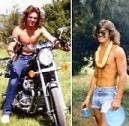
During my life I have had a propensity for overindulging in what I consider to be the necessities of life: Books, firearms, coins, liquor and smokes.

Unlike many, I neither smoked much nor drank alcoholic beverages to any degree as a boy or a teenager. The only cigarettes came when one of the "crew" liberated a parental pack and we sat around in an isolated location and smoked until they were gone. I often say I can count the number of beers I consumed during my school years on my fingers, and the same was pretty much true for the "hard stuff."

With coins, I have a taste for the bright and the shiny, which translates into silver or gold. With firearms, I am deadly with a handgun or a rifle and less than average with a shotgun, so you can figure for yourself which I prefer. I have bought and sold and traded since I was a teen, but never owned more than 60 at a single time. Owning means care and cleaning, whether one is shooting them or not. I assume you get my drift there.

Books have come in all shapes/sizes/genres. In recent years, my focus has been on the "Plains Indian Wars," which ran from roughly 1850 through 1890. My interest has been great enough to devote six weeks on a "tour" of frontier forts and battlefields which ranged from Minnesota to Montana then south to Texas and back again. I also have participated in two archaeological surveys as an amateur volunteer -- one of which meant walking and hands and knees crawling long days in and around Fort Phil Kearny in Wyoming.

Many of the nonfiction and fiction books I have been reading center on that era, as well as the transmigration of settlers from Europe to North America. I am constantly suggesting people read writers like Frederic Manfred and Mari Sandoz and Ole Rolvaag and Hamlin Garland and ....

I periodically purge my collection of books, with the largest being 150. By purge, I mean give them to libraries. There have been occasions when librarians have said, "Sorry, not interested." Those words always shock me, but, I do understand that, like individuals, institutions occasionally must purge their holdings. One of my "sneakier" techniques is simply to "dump" a dozen books into a library's return chute.

One of my "chores" the past few days has been to sort through and rearrange a few bookshelves. Two of my more interesting finds have been these: "Exploring Literary America," a 1979 book by Marcella Thum, and "The Dictionary of Cliches," a 1985 offering by James Rogers. The former book offers a few pages of biographical material on 70 writers and the latter is data on more than "2,000 common or amusing clichés -- their meanings and origins."

Both books have been useful to me at times, but cannot "hold a candle" to the near-instantaneous internet these days.

Moving sideways a few steps, my ability to curse for five or six minutes nonstop without taking a breath I blame on or I credit to -- depending upon one's viewpoint -- to the Marine Corps. I have my doubts the internet will make that "skill" obsolete ....

Semper whatever, baby ....


Monday, March 1, 2021

"Dear March -- Come in -- How glad I am"

I more or less stumbled across this Colt Lightning Model 1877 revolver for sale in New Mexico and brought it "home" to Saint Paul, Minnesota. The then-new revolver -- still in remarkably good condition for its age -- was shipped from the Colt factory in Hartford, Connecticut, to the William R. Burkhard Sportsman's Headquarters at 23 East Third Street in Saint Paul on June 28, 1888. From there, the handgun was sold to an unknown person and was "lost to history" until I obtained it. The Sportsman's Headquarters was in business until the 1930s and was located about 10 miles from the current residence of the revolver .... sort of like it has come home after 132 years and who might know how many adventures. The original posts about the Lightning appeared in June 2015 -- for the curious among you. The book below has a similar tale, for those who wish to read on ....


Where have you been, what have you seen

"If only 'it' could talk" is an expression we occasionally use and hear.

Most often, I think, the "it" refers to walls.

More often -- for me, anyway -- it refers to a coin or to a book or to a firearm.

Will Durant, formally known as William James Durant, was a historian / a writer / a philosopher who, in collaboration with his wife, Ariel, published an eleven-volume masterpiece, "The Story of Civilization," and a number of other books. I thought I very probably had read all the Durants had in print until I encountered and purchased the book, "Transition," which he had published in 1927. It is subtitled, "A Sentimental Story of One Mind and One Era."

No, this is not a post about the Durants or about "Transition," a thinly-disguised autobiography posing as a novel. It is about a book in the context of "if only it could talk."

A name, "J.C. Arnout, M.D.," is stamped on the inside of the cover. My assumption is that Doctor Arnout was the first owner. I am fascinated by the Durants and, guilt by association, also am somewhat interested in anyone interested in them. The address, "2626 S. Robertson Blvd. Los Angeles, California," is stamped below the name.

It is obvious the odds of anyone practicing medicine in Los Angeles in the 1920s would still be walking the Earth are beyond remote, but I did a cursory internet search on the last name thinking about possible descendants and other relatives. I came up empty on the name, so I typed in the address and came up with a building and this information about it.

"Nearby schools include Shenandoah Street Elementary School, Cheviot Hills Continuation School and Alexander Hamilton Senior High School. The closest grocery stores are Joe's Market, Venice Market and Vena Market. Nearby coffee shops include Undergrind Cafe, Helms Bakery Cafe Truck and Hayden. Nearby restaurants include Campos Tacos, Taco Bell and The Empanada Factory. 2626 S Robertson Blvd is near Reynier Park, Carthay Circle Park and Northrop Grumman Headquarters."

The parcel is assessed at approximately three-quarters of a million and is not currently on the market.

So much for that -- except, 2626 S. Robertson Blvd. is only about ten miles from Los Angeles International Airport, which I do pass through on occasion. Be fun -- for me, anyway -- to see the place once occupied by a medical doctor who read Will Durant. And, I cannot help but be curious about the taste of the coffee at the Undergrind Café and if, perchance, banana cream pie is on its menu ....

I purchased the book from an elderly woman in Grass Valley, California, nearly 450 miles north of Los Angeles. It would be interesting -- to me, anyway -- to know the story of the book's journey between L.A. in 1927 and Grass Valley in 2021.

But, since a book cannot talk in a literal sense, there is no compelling reason for me to try to trace and to track its journey. Right now, I simply plan to read and to learn from the words put to paper nearly a century ago by William James Durant.


Sunday, February 14, 2021

What is love ....

 Here we go again -- once upon a time ....

Aristotle wrote: "Love is composed of a single soul inhabiting two bodies."

Dr. Seuss wrote: "We're all a little weird, and life's a little weird. And when we find someone whose weirdness is compatible with ours, we join up with them and fall in mutual weirdness and call it love."

I am not certain, but I think those two are saying the same thing in their own ways. In any event, Valentine's Day is upon us again and, with that, I bid you Happy Valentine's Day and convey wishes your love life may be smoother than, but as thrilling as, that of Eros and Psyche.

Eros (Cupid / Astrilde) was the son of Aphrodite (Venus / Freyja) and the personification of intense love. Eros is the guy running around shooting arrows of love into humankind causing them to fall in love, hence the image of Cupid. Psyche was the youngest of three daughters of a king and renowned for her beauty. She was so beautiful, in fact, that Aphrodite became jealous and ordered Eros to make her fall in love with a monster. The dutiful son set out to do that, but fell in love with the exquisite maiden himself when he saw her .... the story goes on from there and is easy to find, should anyone be curious enough to pursue it.

In fact, C.S. Lewis, author of such classics as "The Screwtape Letters" and "The Chronicles of Narnia," wrote a retelling of the "myth" of Cupid and Psyche in the form of a novel and told the tale from the perspective of one of Psyche's sisters. "Till We Have Faces" is the novel and was the last Lewis wrote. It deeply delves into religious ideas, but in the context of a pagan setting. The book has been described as reading for mystics of any and all religions.

I hope a few of you will read it, whether or not if you think of yourself as a mystic ....

For more clarity, if you wish it:

Eros or Amor is a male from the Old Greek; Cupid is a male from the Latin/Roman; Astrilde is a female from the Old Norse and a relatively late Nordic persona for Eros or Cupid. Essentially, they are names for the same "god" in their respective cultures.

Aphrodite is from the Old Greek; Venus is from the Latin/Roman; Freyja is from the Old Norse. All are female and, essentially, the same "god" in their respective cultures.

In the spirit of Valentine's Day, here are two videos of young ladies singing their hearts out in the name of love: Giacomo Puccini's  "O Mio Babbino Caro" from Gianni Schicchi sung by Valentina Naforniță  and Элизиум с Таней Малой на подиуме.

I like both performances and I hope a few of you will, as well ....


Something special ....